
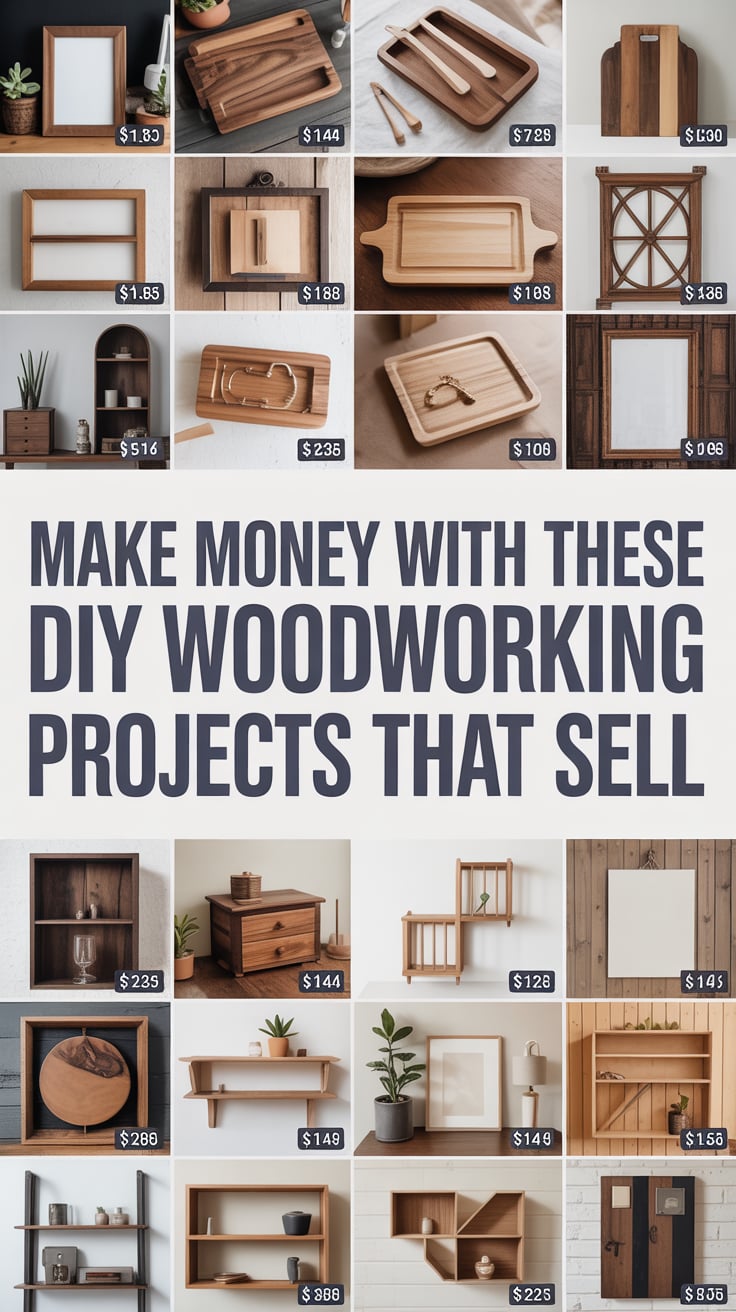
Turning sawdust into income is absolutely doable when you focus on projects buyers actually want. In this guide, you’ll learn how to make money with these 14 DIY woodworking projects that sell, how to finish and package them to stand out, and how to market them online and locally so orders keep coming in.
If you want ready-to-build plans that cover everything from small giftables to furniture, browse the extensive plan library at TedsWoodworking right after you finish this intro.
Table of Contents
Make Money with These 14 DIY Woodworking Projects That Sell: Small Giftables
Small, stylish, and affordable items are the perfect on-ramp to consistent orders. Two evergreen best-sellers are coasters and phone stands.
Coaster sets
- Why they sell: They’re functional, giftable, and easy to batch. Buyers love unique wood grain, inlays, and seasonal or monogram engraving.
- Materials and build: Use hardwood offcuts for durability and a premium look. Keep thickness uniform and edges eased. Consider simple geometric patterns by gluing contrasting strips, then crosscutting for a striking checker or stripe design.
- Customization ideas: Laser or CNC engraving (names, dates, coordinates), resin inlays, or woodburned motifs elevate perceived value. Offer sets of four or six with a matching holder for an easy upsell.
- Finishing and use: Choose a water-resistant finish suitable for moisture and heat. Add cork or silicone feet to protect surfaces and prevent slipping.
Phone stands and docking stations
- Why they sell: Work-from-home and desk setups continue to trend. Stands solve a universal annoyance—keeping your phone visible and upright—while docking stations add watch and pen trays.
- Materials and build: A two-piece friction-fit design is quick to produce. Experiment with angle and slot width to fit popular devices with cases. Hidden cable pass-throughs are a nice touch.
- Customization ideas: Monograms, brand logos for corporate gifts, or family names. Offer light, medium, and dark woods so buyers can match their decor.
- Packaging tip: Wrap each piece in kraft paper with a care card. Small, thoughtful branding boosts unboxing delight and reviews.
Batching is your best friend here: cut, sand, and finish in groups to keep unit time low. For pricing, position giftables as premium but approachable—your craftsmanship and finishing justify the price without racing to the bottom. When listing online, use lifestyle photos that show the item in context on a desk or coffee table.
Kitchen and dining projects buyers reorder
Kitchen pieces create repeat buyers because they make excellent gifts and housewarming presents. Two standout sellers: cutting boards and serving trays.
End-grain or edge-grain cutting boards
- Why they sell: Beautiful grain patterns and durability. End-grain boards are coveted for being gentle on knives; edge-grain boards are quicker to build and still attractive.
- Materials and build: Stick to food-safe hardwoods. Alternate light/dark species for contrast. Glue-up accuracy and dead-flat surfaces matter—flatten carefully and sand progressively for a silky finish.
- Customization ideas: Juice grooves, finger holds, and non-slip feet. Include a care kit option (board oil and a card with maintenance instructions) as an easy add-on.
- Listing SEO: Include terms like “handmade cutting board,” “butcher block,” “food-safe,” and wood species in your titles and tags.
Serving trays and charcuterie boards
- Why they sell: Entertaining is back—buyers want pieces that photograph well. Trays with metal or leather handles look upscale, while charcuterie boards with live edges showcase character.
- Materials and build: Keep charcuterie boards simple: flattened live-edge slabs with rounded corners feel artisanal. For trays, ensure strong handle attachment; pre-drill to avoid splitting.
- Customization ideas: Laser-etched family names, coordinates, or a wedding date. Offer bundled sets (tray + coasters) for gifting.
Photography matters here—style with food or props for lifestyle shots, not just product-only images. Read the Etsy Seller Handbook’s guidance on listing photos and SEO to improve visibility. Source: Etsy Seller Handbook.
Storage and organization designs that consistently move
People pay for organization that looks good. Floating shelves and entryway organizers are perennial hits because they solve daily clutter and pair well together.
Floating shelves
- Why they sell: Clean, modern, and space-saving. Shelves are often purchased in multiples, driving bigger order totals.
- Materials and build: Choose straight, stable stock. A hidden bracket or cleat system is critical; test weight capacity and include installation instructions. Consider offering two depths for books vs. decor.
- Customization ideas: Stains that match popular decor styles (natural, walnut, black). Offer pair or trio bundles at a favorable per-shelf price to increase average order value.
Entryway organizers and key racks
- Why they sell: Every household battles the “dump zone.” A compact wall caddy with hooks, a mail slot, and a small ledge is an easy win.
- Materials and build: Design around common envelope sizes. Pre-finish hooks and hardware separately, then attach after topcoat for crisp results.
- Customization ideas: Family name plaques, numbered hooks, or small chalkboard/whiteboard insets for notes.
If your workspace is tight and you’re juggling tools on a budget, mastering shop layout and tool selection will speed production. The workshop setup guidance in UltimateSmallShop – The Next Woodworking Blockbuster! can help you organize a compact, efficient shop that fits your space and budget—key for profitable batching.
Home decor accents that attract repeat buyers
Frames and wood signs are powerful because they allow for limitless styles and personalization, making them ideal for bundles and seasonal refreshes.
Picture frames and poster frames
- Why they sell: They’re decor staples and pair perfectly with prints. Sets of two or three encourage bigger carts.
- Materials and build: Keep miters tight and consistent; use splines or V-nails for reinforcement. Offer common print sizes, and include an acid-free backing board and hanging hardware. Magnetic poster frames with leather or cotton cords are a minimalist bestseller.
- Customization ideas: Engraved borders, painted accents, or distressed finishes. Offer “gallery wall” bundles—3 or 6 coordinated frames.
Wood signs and wall art
- Why they sell: Words and motifs with meaning sell year-round—family names, inspirational quotes, geographic coordinates, and nursery themes.
- Materials and build: Use smooth, defect-minimized boards for crisp lettering. Stencils, CNC, or laser make consistent text; hand-painted signs have an artisan charm.
- Customization ideas: Seasonal collections (spring botanicals, autumn harvest, holiday greetings) drive repeat buys.
To keep demand steady, watch search cycles. Validate themes and keywords before building inventory with tools like Google Trends. For small-business basics (licenses, taxes, and record-keeping), the U.S. Small Business Administration is a reliable starting point.
Pet and kid-friendly builds buyers appreciate
Parents and pet owners invest in items that make everyday life tidier and safer. Two winners: raised dog bowl stands and kid storage solutions.
Raised dog bowl stands
- Why they sell: Elevated bowls are cleaner and look nicer than floor bowls. Buyers often add a name engraving for personalization.
- Materials and build: Make stands sturdy with wide feet and smooth edges. Use a finish that’s easy to wipe and consider silicone gaskets to seat bowls rattle-free.
- Customization ideas: Dog names, paw motifs, or breed silhouettes. Offer multiple heights (small, medium, large) and dual-bowl versions.
Toy bins and book slings
- Why they sell: Parents want quick cleanup and kid-accessible storage. Book slings are particularly popular in nurseries and playrooms because the covers face out.
- Materials and build: Round over edges and avoid small detachable parts. Anchor points should be robust for wall-mounted designs.
- Safety note: Always factor in safety guidance for children’s products—materials, finishes, and anchoring. Refer to consumer safety resources for best practices.
These designs invite a clean, modern aesthetic—think Scandinavian light woods or painted neutrals. When listing, emphasize benefits: “easy-to-clean,” “rounded edges,” “space-saving.” For local sales, partner with pet boutiques or children’s stores on consignment or short-term pop-ups.
Outdoor and garden best-sellers with seasonal peaks
Outdoor items spike with the seasons, making them ideal for targeted batches. Plan ahead for spring and summer craft markets with planter boxes and birdhouses.
Planter boxes and herb gardens
- Why they sell: Instant curb appeal and practical for patios. Window boxes, deck planters, and vertical herb gardens all move well.
- Materials and build: Weather-resistant materials are key. Pre-drill drainage holes. Consider modular designs that can connect for longer runs.
- Customization ideas: House number planters, family names, or custom widths. Offer liner options for easy replanting.
Birdhouses and feeders
- Why they sell: They appeal to nature lovers and make thoughtful gifts. Unique rooflines, copper accents, or contrasting trims add curb appeal.
- Materials and build: Ensure entrance size and ventilation suit local bird species; avoid toxic finishes. Provide a hanging loop or mounting bracket with clear instructions.
- Customization ideas: “Modern farmhouse,” “cabin,” or “mid-century” themes to match outdoor decor.
Garden stools or small side tables
- Why they sell: Handy for patios and balconies. Compact builds keep material costs low and make excellent upsells when paired with planters.
- Materials and build: Prioritize stability and outdoor-ready finishes. Rounded edges and slatted tops handle the elements better.
Seasonality tip: Build and photograph outdoors while plants are lush to capture bright lifestyle images. Then schedule your listings or social posts to coincide with peak interest. For pop-ups and farmers markets, bring a few “ready-to-go” sets and a simple order form for custom sizes.
Compact furniture and quick builds with healthy margins
The sweet spot for many small shops is furniture that ships easily or sells locally without delivery headaches. Two proven sellers: side tables/stools and blanket ladders.
Side tables and sturdy stools
- Why they sell: They’re versatile—bedside, plant stands, or accent tables. Simple joinery with clean lines fits nearly any decor.
- Materials and build: Focus on rock-solid joinery and level feet. Keep dimensions small enough for easy packaging. Consider two finishes (natural and dark) plus a paint option for modern interiors.
- Customization ideas: Round, square, or triangle tops; lower shelves for storage; brass or black metal accent feet.
Blanket ladders
- Why they sell: They’re both decorative and useful, perfect for living rooms and bathrooms. They photograph beautifully, which helps listings perform.
- Materials and build: Keep rails straight and rungs evenly spaced; secure joinery to handle heavy textiles. Include non-slip pads for hardwood floors.
- Customization ideas: Offer two heights and three finishes. Rustic textures or smooth modern lines create distinct looks.
Efficiency matters when you scale production. Label jigs, standardize dimensions, and track time per task so you can batch without quality dipping. If you want help turning your workflow into a compact, budget-friendly shop system, the guidance in UltimateSmallShop – The Next Woodworking Blockbuster! can streamline layouts, dust collection, and tool choices.
Recommended plan libraries and shop resources
- Plan library for any skill level: If you prefer building from proven, step-by-step designs, explore TedsWoodworking. A large variety of templates helps you expand your catalog fast.
- Space-saving shop setup: For small garages or shared spaces, UltimateSmallShop – The Next Woodworking Blockbuster! offers guidance to fit tools and workflows into tight quarters.
- Outdoor builds and storage: Planning a backyard build or extra storage? My Shed Plans includes shed and outdoor structure plans that can complement your garden lineup.
Your next 30 days to launch and grow
- Days 1–3: Validate demand. Check trends for your top ideas and scan best-selling listings for style cues and keywords.
- Days 4–10: Build your first micro-collection. Choose three products from the list above and produce 3–5 of each. Photograph lifestyle and detail shots.
- Days 11–14: Write search-optimized listings. Use keyword-rich titles and tags, answer common buyer questions in descriptions, and add size/finish choices.
- Days 15–20: Launch on one marketplace and one social channel. Offer a limited-time bundle (e.g., tray + coasters). Collect feedback and improve your care cards and packaging.
- Days 21–30: Batch produce your best performer and pitch three local shops for consignment or wholesale. Register any required licenses.
Want a step-by-step blueprint for turning your workshop into a side business—products, pricing, and sales channels included? Check out WoodProfits for practical guidance on setting up and selling without guesswork.
Conclusion
The fastest path to steady orders is focusing on proven, repeatable sellers and presenting them with premium finishing, clean photos, and buyer-focused descriptions. Start with a small, cohesive collection from this list and scale what moves. With a thoughtful workflow and clear listings, you can absolutely make money with these 14 DIY woodworking projects that sell—and enjoy the process of building a brand that customers come back to.
FAQ
What are the easiest DIY woodworking projects that sell?
Coaster sets, phone stands, and simple wall signs are quick to build, easy to batch, and priced for impulse buys—ideal for getting your first sales and reviews.
How do I price my handmade wooden items for profit?
Track your build time, materials, and finishing costs, then add a healthy margin and account for fees and packaging. Offer bundles to increase average order value without underpricing.
Where should I sell these projects first?
Start where your audience already shops: online marketplaces, Instagram/Facebook Shop, and local boutiques or pop-ups. Test channels and double down on the one delivering consistent orders.
What finish should I use for cutting boards and trays?
Use food-safe finishes appropriate for kitchen items and include a care card with maintenance tips. Keep finishes consistent across a product line to streamline production.