
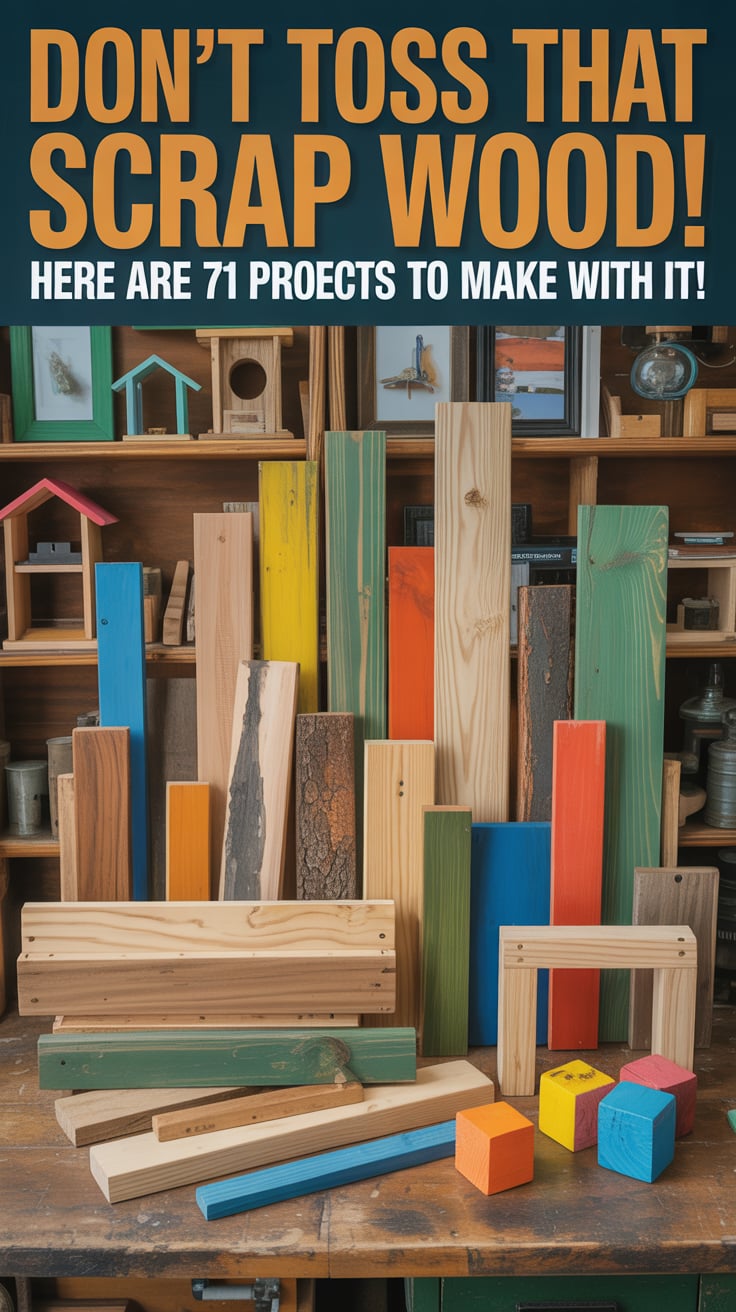
Scrap bins fill up fast. Offcuts from rips, crosscuts, and miscuts might look like junk, but they’re actually a goldmine for quick wins, skills practice, and even gift-worthy builds. If you’ve ever thought, “Don’t Toss That Scrap Wood! Here are 71 Projects to Make With It!” you’re in the right place. Below, you’ll find categorized ideas you can complete in an evening or a weekend, with smart tips on sizing, joinery, and finishes so every little board earns its keep.
If you love working from proven plans and cut lists, browse the massive plan library in TedsWoodworking to turn scraps into real, useful builds—without guesswork.
Pro tip before you start:
- Sort scrap by thickness, then by length. Keep a “shorts” box (under 12″), a “medium” bin (12–24″), and a “strips” section for thin rips. Label species if you mix hardwoods and softwoods
Table of Contents
Don’t Toss That Scrap Wood! Here are 71 Projects to Make With It — Shop Helpers and Jigs
The shop is the best place to put scraps to work first. Make safer cuts, repeatable joinery, and better glue-ups using pieces you’d otherwise toss.
- Miter saw stop block: A squared offcut with a clamp hole for repeat cuts.
- Push sticks and push pads: Thin rips become grippy safety helpers for the table saw and jointer.
- Featherboards: 3/4″ thick scraps with angled kerfs to hold stock tight against fences.
- Crosscut sled runners: Straight hardwood strips sized to fit your miter slots.
- Bench dogs: Short hardwood dowels or square dogs for secure clamping on the bench.
- Glue-up clamping cauls: Long, slightly bowed boards wrapped with packing tape to prevent sticking.
- Sanding blocks: Cut to fit common sandpaper sizes for flat, even sanding.
- Router bit tray: Shallow block drilled for 1/4″ and 1/2″ shanks.
- Drill press fence: A flat, straight board with T-track or slots for repeat drilling.
- Dovetail or box joint test blocks: Keep marked “test” to dial in perfect fits.
- Pocket-hole jig spacer blocks: Consistent offsets for edge joinery with your pocket-hole system.
Shop tips:
- When making jigs, use stable scraps like birch ply or straight-grained hardwoods for longevity.
- Seal jig surfaces with a quick coat of shellac or wax to reduce glue adhesion and moisture changes.
- For glue-ups and finishes, see [Simple wood finishes that last](INTERNAL LINK PLACEHOLDER).
Space-Savvy Storage and Organization
Small offcuts are perfect for organizers. These builds tame clutter and can sell well at craft fairs.
- Wall-mounted coat rack: Short board with hooks and keyholes on the back.
- Entryway key shelf: Add a tiny tray for mail and a rail for sunglasses.
- Floating corner shelves: Triangular scraps become compact display space.
- Desktop monitor riser: Lift your screen to eye level and add cubbies underneath.
- Charging station stand: Cable pass-throughs and a rear cord corral.
- Drawer dividers: Rip narrow strips for custom utensil or tool inserts.
- Pegboard shelves: A few holes and dowels create modular peg shelves.
- Bookshelf bookends: Hefty right-angled blocks or decorative silhouettes.
- Magnetic knife or tool strip: Embed magnets behind a hardwood face.
- Wall-mounted mail sorter: Two or three angled pockets from thin plywood.
Pro tip:
- For hole-drilling accuracy, clamp a backer board behind thin scraps to prevent tear-out.
- A wipe-on poly or waterborne finish holds up well for organizers.
Don’t Toss That Scrap Wood! Here are 71 Projects to Make With It — Kitchen and Dining
Turn scraps into useful, food-safe creations. Stick to hardwoods like maple, walnut, cherry, and beech for durability.
- End-grain coasters: Glue up small strips, crosscut, and sand to perfection.
- Serving boards: Long offcuts with a chamfered edge and a thumb hole.
- Trivets: Slatted designs from short hardwood pieces resist heat.
- Tea box or spice caddy: Small compartments, lift-off lid, clean joinery.
- Napkin holder: U-shaped frame with a weighted dowel for outdoor use.
- Utensil rest: A shallow groove keeps spoons off the counter.
- Knife rack block: Compact angled block for common chef knives.
- Bottle caddy: Six-pack style with dowel handle for picnics.
- Tapered chopsticks: Thin rips shaped and sanded; add a food-safe finish.
- Salt cellar with pivot lid: Drill a cavity; pin the corner for a swinging top.
Safety note:
- Finish kitchen items with mineral oil, walnut oil, or a hardwax oil marketed as food-contact safe.
- For wood dust health info, review OSHA guidance: U.S. OSHA — Wood Dust.
If your shop is squeezed into a corner, UltimateSmallShop – The Next Woodworking Blockbuster! shares practical advice on layout, dust control, and budget-friendly setups tailored to tight spaces—ideal for turning even a small garage into a productive scrap-powered studio.
Artful Decor and Wall Accents
Scrap wood is made for accent pieces. Mix species for contrast and lean into texture, inlays, and simple geometric patterns.
- Geometric wall mosaic: Arrange triangles/diamonds from thin offcuts.
- Picture frames: Use mitered hardwood strips; add splines for strength.
- Floating frame for canvas: Slim hardwood frame that “floats” artwork.
- Hexagon shelves: Six equal pieces glued into honeycombs.
- Batten-and-board accent: Narrow vertical slats add dimension to walls.
- Candle holders: Bored recesses for tea lights; keep safe clearances.
- Mantel clock: A small face inset; finish with oil and wax.
- House numbers plaque: Router-carved numbers on a sealed hardwood base.
- Rustic ladder decor: Non-weight-bearing display for throws or lights.
- Plant propagation station: Test-tube vases in a slender wood rail.
Design tip:
- For mosaics, pre-sand pieces, glue to a plywood backer, then level-sand.
- A mix of contrasting species makes patterns pop; label your species bins to speed selection.
Don’t Toss That Scrap Wood! Here are 71 Projects to Make With It — Outdoor and Garden
Exterior-friendly builds thrive on scraps when you choose the right finish and hardware. Consider cedar, cypress, redwood, or pressure-treated for longevity outdoors.
- Planter box liners: Slim slatted sides with a plastic pot inside.
- Garden tool rack: Scrap board with slots and hooks near the shed door.
- Hose guide stakes: Rounded tops prevent hose kinks around garden beds.
- Birdhouse: Classic A-frame or modern cube; add drainage and ventilation.
- Bat house: Slatted interior for grip and a roughened entry.
- Trellis panels: Thin strips form lattice for climbing plants.
- Porch signs: Vertical plaques with painted seasonal graphics.
- Bench slats replacement: Refresh an old metal-frame bench with hardwood strips.
- Outdoor lantern frames: Glazed with acrylic for shatter resistance.
- Boot scraper: Angled slats between two sturdier side blocks.
Finish tip:
- Use exterior-rated glue and screws; seal edges with spar urethane or penetrating oil.
- Learn about exterior topcoats in [DIY outdoor sealers comparison](INTERNAL LINK PLACEHOLDER).
- For responsible reuse and disposal, see U.S. EPA — Wood Materials and Products
Kids, Pets, and Play
Fun builds don’t require full sheets of anything. Rounded edges and smooth finishes are key.
- Crayon caddy: A small tote with drilled holes for crayons and markers.
- Mini car ramps: Laminated strips with a gentle curve for toy cars.
- Storybook ledges: Slim wall shelves with a front lip to display covers.
- Puzzle blocks: Cut cubes from hardwood, sand edges, add simple patterns.
- Dollhouse furniture: Chairs, tables, and beds from tiny offcuts.
- Step stool: Two-side panels and a slatted top for a safe boost.
- Cat window perch: A padded shelf with L-brackets into wall studs.
- Elevated pet bowl stand: Cutouts for bowls; seal with water-resistant finish.
- Ring toss game: A base block with dowel posts and rope rings.
- Dominoes set: Thin hardwood rectangles with contrasting inlay dots.
Safety essentials:
- Break sharp edges with a block plane or 220-grit sandpaper.
- Avoid finishes with lingering solvents; opt for waterborne poly once fully cured.
Gifts, Seasonal, and Craft-Fair Bestsellers
Turn piles of offcuts into low-cost, high-charm items that sell or gift beautifully.
- Phone stands: Simple slot or angle cut to hold smartphones on desks.
- Watch and ring valet tray: Routed recesses and a shallow catch-all.
- Personalized keychains: Monogrammed hardwood slices or small slabs.
- Candle tray with metal handles: Rustic meets modern with black hardware.
- Wine bottle balancer: Counterbalanced “gravity” stand cut at a precise angle.
- Magnetic bottle opener: Wall-mount opener that catches caps inside.
- Ornament sets: Stars, trees, or geometric shapes from thin scraps.
- Pen holder block: Clean grid of holes in a square hardwood block.
- Guitar pick box: Sliding lid on a tiny keepsake box.
- Minimalist wall hooks: Angled pegs on a narrow backing strip.
Seasonal strategy:
- Batch small items from one setup to save time and match grains.
- Price to move when using scraps; your material cost is low, but sand and finish for premium feel.
Short on time or want clean CAD-style plans? Browse TedsWoodworking for step-by-step, printable plans you can scale to match your offcuts.
Quick Tips for Working Smarter With Scraps
Scrap wood is diverse—species, thickness, moisture—all mixed together. A few habits make builds go smoother and safer.
- Mill in stages: Face-joint and plane thicker scraps, then sticker to acclimate before final milling.
- Label thickness: Mark 3/4″, 1/2″, 3/8″ to speed project matching.
- Edge-grain vs. end-grain: End-grain soaks glue; increase glue coverage or use mechanical reinforcement.
- Grain orientation: For cutting boards or trivets, alternate growth rings for stability.
- Upcycle hardware: Save hinges, handles, and hooks from old furniture for scrap builds.
- Dust and health: Use dust collection and a quality respirator, especially when sanding small parts. See CDC/NIOSH — Wood Dust.
- Finishing small parts: Mount pieces on painters’ pyramids; pre-drill and use toothpicks as “handles” for easier spraying or wiping.
Resources That Multiply Your Scrap Potential
A few well-chosen guides can help you build faster, safer, and in a smaller footprint.
- Plans library: TedsWoodworking gives you thousands of plan ideas you can scale down for scraps.
- Small-shop blueprint: UltimateSmallShop – The Next Woodworking Blockbuster! offers practical guidance for efficient layouts and tool selections when space and budget are tight.
- Outdoor builds and storage: If you’re thinking bigger than scraps, My Shed Plans can help you plan yard storage so your scraps stay dry and usable.
- Side-income ideas: WoodProfits shares general tips on turning small builds into steady shop income.
Conclusion: Don’t Toss, Transform
You don’t need a cart full of fresh lumber to create useful, beautiful work. Between shop jigs, organizers, kitchen gear, decor, outdoor helpers, and gifts, scraps can keep your skills sharp while saving money and reducing waste. The next time you’re tempted to empty the bin, remember: Don’t Toss That Scrap Wood! Here are 71 Projects to Make With It! Start with one idea, batch a few more, and keep that offcut bin working for you—not against you.
Build smarter:
- Prep your bins, keep a few go-to finishes on hand, and grab a plan when you want certainty.
- For guided builds and layouts, explore TedsWoodworking and UltimateSmallShop – The Next Woodworking Blockbuster!.
FAQ
What size scraps are worth keeping?
Keep hardwoods down to about 8–10 inches and plywood down to 12 inches with at least 2 inches width. Ultra-thin rips are great for inlays and shims. If it’s straight, flat, and safe to clamp or hold, it’s usable.
How do I store scraps so they don’t warp?
Sort by thickness, stack like with like, and sticker thicker pieces so air circulates. A simple vertical rack with dividers keeps boards upright;
What finishes are best for scrap wood projects?
Use wipe-on poly or waterborne poly for general items; food-safe oils for kitchen builds; spar urethane or exterior oil for outdoor projects. Read more at USDA FPL
Is it safe to use pressure-treated scraps for projects?
Avoid pressure-treated wood for indoor or food-related items. Reserve it for outdoor ground contact. Always wear PPE and collect dust. For safety info, see OSHA — Wood Dust