
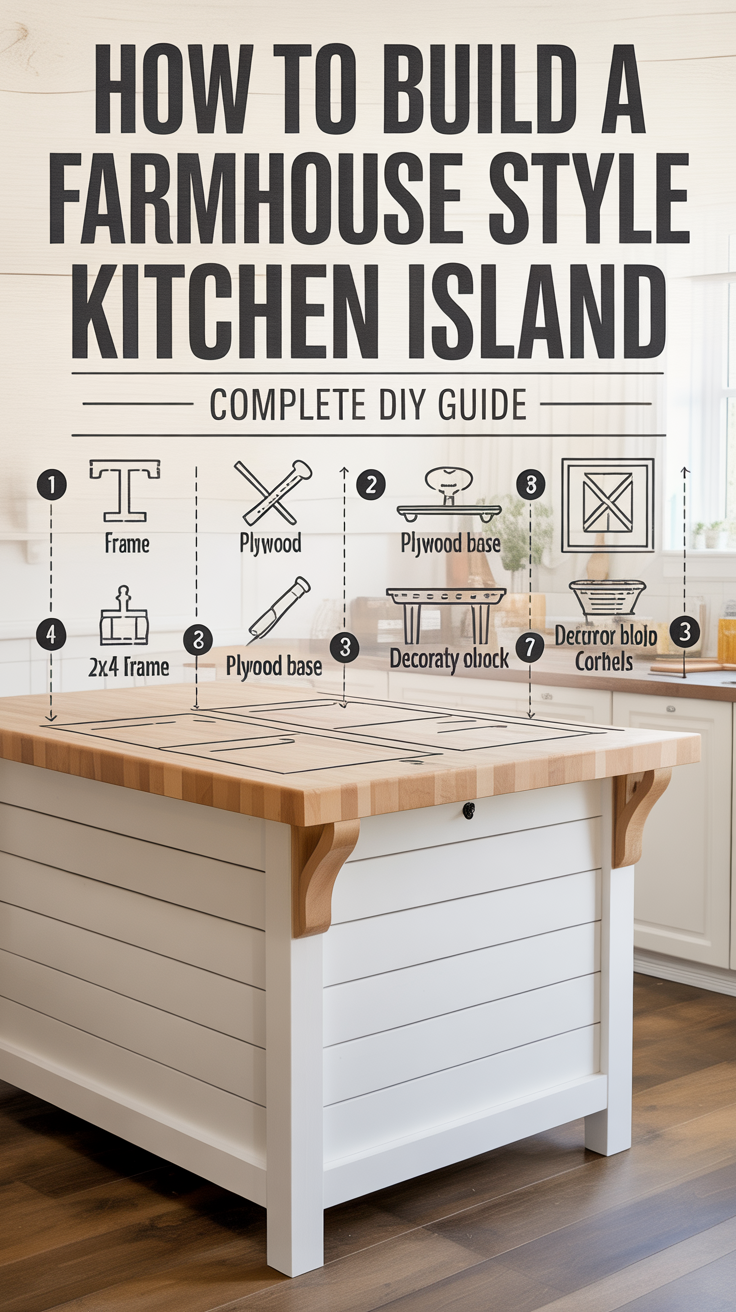
A farmhouse style kitchen island adds workspace, storage, and classic charm to any home. This hands-on guide shows you how to build a farmhouse style kitchen island from planning to finishing, with realistic options for size, joinery, and the rustic details that define the farmhouse look. If you’re new to woodworking, don’t worry—you’ll find clear steps, smart tips, and safety guidance to help you complete a beautiful, durable island at home.
If you want ready-to-use plans to customize for your space, you can speed things up with a comprehensive plan library like TedsWoodworking, which offers a wide range of project designs and layouts you can adapt to your island build.
Table of Contents
Plan a Farmhouse Island That Fits and Functions
Before cutting lumber, design the island to fit your kitchen’s footprint and flow. Function comes first—farmhouse style is about everyday usability.
- Clearances and walkways: The National Kitchen & Bath Association recommends at least 36 inches of walkway around islands and 42 inches in work zones when appliances and drawers open. If multiple cooks use the kitchen, 48 inches is more comfortable. See the NKBA kitchen planning guidelines for more detail (NKBA).
- Size and seating: A common free-standing farmhouse island is 36 inches high, 24–30 inches deep, and 48–72 inches long. For seating, allow about 24 inches of width per stool, and an overhang of 10–12 inches for knee space.
- Appliance clearance: If your island faces an oven, dishwasher, or refrigerator, ensure enough space for doors to open fully while someone is standing there. Measure real appliance dimensions, not just nominal sizes.
- Workflow: Keep cutting and prep across from the sink, and consider trash pull-out location. If your island is primarily for prep and casual dining, prioritize drawers and open shelving over deep cabinets.
Design sketches and a basic model (paper, cardboard templates, or software) help verify proportions and flow in your actual kitchen. Tape the footprint on the floor, pull chairs into place, and “walk through” your kitchen routines. It’s the easiest way to catch sizing issues early.
- Styling cues: Farmhouse style often includes painted base cabinets, a warm wood top, beadboard or shiplap paneling, framed or X-brace end panels, and chunky legs or corbels under the overhang. You can mix details—beadboard on the back panel with simple shaker-style doors on the front looks clean and classic.
- Storage strategy: Decide early if you want a microwave shelf, pull-out trash, built-in towel bar, or a shallow bookshelf for cookbooks. Decisions here affect internal partitions and shelf supports.
- Flooring and fastening: Free-standing islands can be heavy. If you plan to fasten yours, locate floor joists and consider hidden brackets or cleats. For floating or movable islands, add locking casters and a toe-kick to hide them.
Authority source: NKBA guidelines provide helpful minimums and recommended dimensions for safe, comfortable kitchens (National Kitchen & Bath Association).
Materials and Design Details for an Authentic Farmhouse Look
Your materials determine both durability and the farmhouse vibe. Choose wood species, panels, and top surfaces for long-term performance in a kitchen environment.
- Lumber for frames and trim: Poplar, soft maple, or pine are popular for painted farmhouse bases. Poplar machines well and paints smoothly; pine is budget-friendly and rustic. If you want a stained base, consider oak or maple for durability.
- Panels and carcass: 3/4-inch cabinet-grade plywood (birch or maple) is ideal for the carcass and shelves—stable, flat, and strong. Use 1/4-inch plywood or beadboard for back panels if you prefer lighter weight and a traditional look.
- Farmhouse face frame and trims: Build a face frame with 1×2 or 1×3 stock (actual 3/4-inch thick). Add shaker rails/stiles to doors and drawer fronts, and consider applied trim like v-groove, beadboard, or shiplap on the island’s back side for character.
- End panel treatments: X-brace detail is a farmhouse staple. Create X-braces from 1×3 or 1×2 stock fitted into a simple recessed frame. Another option is a frame-and-panel end with beadboard.
- Island top options: Butcher block brings warmth and is easy to refinish. Reclaimed-plank tops add patina but require careful glue-ups for stability. If you prefer stone, plan for added weight and appropriate substructure.
- Overhang support: For 10–12 inches of overhang, install decorative corbels or hidden steel/L-shaped brackets anchored into structural parts of the island. Larger overhangs (beyond 12 inches) require stronger support.
Finishes and durability:
- Paint and stain: High-quality enamel paints resist wear. For the top, penetrating oils or varnish/polyurethane blends provide protection; choose products appropriate for kitchen surfaces and follow cure times.
- VOC awareness: If working indoors, consider low-VOC finishes and adequate ventilation. Learn more about VOCs and indoor air quality (U.S. EPA).
- Edge protection: Add a slight chamfer or round-over to top edges to reduce chipping and soften touch.
Tools, Cut List, and Shop Setup Essentials
A well-organized shop makes the build safer and faster. You can complete this project with common DIY tools and a methodical approach.
Core tools:
- Measuring/marking: Tape measure, combination square, marking knife/pencil, layout square.
- Cutting: Circular saw with a straightedge guide or track saw for plywood; miter saw for trims; jigsaw for notches; table saw optional for repeat rips.
- Joinery: Pocket hole jig, drill/driver, countersink bit, clamps, brad nailer (optional).
- Surface prep: Random-orbit sander with discs (80/120/180/220 grit).
- Assembly: Wood glue, screws, pocket hole screws, right-angle clamps.
Safety must-haves:
- Hearing and eye protection, dust mask or respirator suitable for sanding/finishes, push sticks, and safe clamping techniques. Consider a portable dust collection or shop vacuum setup to keep the workspace clean.
Shop layout tips:
- Create a flat assembly surface (a torsion box bench or a pair of sturdy sawhorses with a straight sacrificial top).
- Stage parts by sub-assemblies: base carcass and face frame first, then doors/drawers, then top and trims.
- Pre-finish interior surfaces to save time and avoid awkward paint angles later.
If you’re setting up a small garage shop and need help fitting tools and dust collection into tight spaces, a resource like UltimateSmallShop – The Next Woodworking Blockbuster! can help you plan layouts, tool priorities, and a budget-friendly workflow without sacrificing safety.
Cut list overview (adjust to your design):
- Carcass sides: 2 panels (3/4-inch plywood), height to finished counter height minus top thickness and toe-kick.
- Bottom and fixed shelves: 3/4-inch plywood, sized to your island depth/width.
- Dividers/partitions: As needed for trash pull-outs or drawers.
- Back panel: 1/4 or 3/4-inch plywood or beadboard depending on design.
- Face frame: 1×2 and 1×3 stock for rails and stiles, sized to cover carcass edges and create openings.
- Doors/drawer fronts: Shaker style from 1×3 with 1/4-inch panel, or slab fronts.
- Trim: Baseboard/toe-kick, corner trim, corbels or bracket supports.
Label each piece and dry-fit components before glue-up. A thoughtful cut list reduces mistakes and makes finishing more efficient.
Build the Base with Strong, Repeatable Joinery
The base is the heart of your farmhouse island. Take your time with square, plumb, and level assemblies—everything else depends on it.
Layout and toe-kick:
- Many farmhouse islands include a recessed toe-kick (3 inches deep, 3–4 inches high) for comfort. Rip and notch your side panels to form the recess. Install a sub-base behind the recess to create a solid footprint.
Carcass assembly:
- Use pocket holes or confirmat screws for strong, quick joints with plywood carcasses. Apply wood glue along edges, clamp, and check for square with a diagonal measurement method.
- Install the bottom panel flush with the toe-kick recess and a fixed shelf at your desired height. Ensure both are square; shelves add rigidity.
- Add vertical partitions if you plan drawers, a trash pull-out, or shelves. Screw through top/bottom into partition edges and use glue blocks for reinforcement.
Back and interior:
- Attach a full plywood back for strength or a frame with beadboard for a farmhouse touch. For beadboard, build a thin frame that captures the panel edges and glue/nail into the carcass. Leave a small expansion gap around panels.
Face frame and openings:
- Glue and clamp the face frame in a flat assembly first, then attach to the carcass with glue and brad nails or countersunk screws. Make sure openings are square and sized for your drawers/doors.
- For drawers, plan for slide clearance (typically 1/2 inch per side, check the slide’s specs).
Joinery options:
- Pocket holes are ideal for face frames and attaching them to the carcass. For the carcass itself, use pocket holes on interior faces so they stay hidden.
- Biscuits or dowels are optional for alignment but not strictly necessary if you have good clamping.
Doors and drawers:
- Build simple shaker doors: rails and stiles from 1×3 with a 1/4-inch plywood panel set in a groove or applied as a floating panel. Hinges can be concealed Euro-style or traditional surface-mount for vintage charm.
- For drawers, build simple plywood boxes, add quality slides, and keep tolerances tight for smooth movement.
Dry-fit the entire base, test doors and drawers, then remove hardware for finishing. Label everything clearly so reassembly is quick after paint or stain.
Island Tops and How to Install Them for Strength
The top is both a focal point and a work surface. Choose a material that suits your budget, maintenance preferences, and the farmhouse look you love.
Butcher block top:
- Classic and warm, butcher block works beautifully on farmhouse islands. You can buy pre-glued slabs or laminate your own from 1.5–2-inch hardwood strips. Maple, oak, and walnut are common; mixed-species tops can look rustic and unique.
- Glue-up tips: Use a flat reference surface, alternate grain direction to minimize cupping, and apply even clamp pressure. Scrape squeeze-out before it cures and sand through grits to 180–220 for a smooth finish.
Reclaimed-plank top:
- For a distressed, rustic appearance, edge-glue reclaimed boards. Mill straight edges, align grain, and add splines or biscuits for alignment. Fill old nail holes with tinted epoxy if needed.
- Use breadboard ends to help keep wide tops flatter over seasons.
Stone or synthetic tops:
- If you’re installing stone, coordinate with a fabricator. Ensure the base is perfectly level and able to support the weight. Increase fasteners at the base and use ledger strips.
Attachment methods:
- Allow wood tops to expand/contract. Use figure-8 fasteners or slotted holes in cleats across the cabinet to let the top move seasonally. Place fasteners every 8–12 inches along the perimeter.
- For 10–12 inch overhangs, install corbels or hidden steel brackets tied into studs or structural members of the island.
Edges and finish:
- A 1/8–1/4-inch round-over softens the edge and resists chipping. For butcher block, choose a hardwax oil, oil/varnish blend, or food-safe oil depending on whether you’ll cut directly on it (most people use cutting boards).
- Maintenance: Wipe spills promptly and refresh the finish as needed. For corbel sizing and overhang guidance, you can find more detailed how-tos at trusted DIY sources like This Old House (This Old House).
Finishing Techniques for a Durable Farmhouse Appearance
Finishing brings the farmhouse character to life and protects your hard work. Prep and product choice are key.
Surface prep and priming:
- Sand all painted surfaces to 120–150 grit, vacuum dust, and wipe with a tack cloth. Fill nail holes and caulk seams as needed.
- Use a quality primer compatible with your paint to prevent tannin bleed (especially on pine and oak). Lightly sand after priming for a smooth base coat.
Painted base:
- Farmhouse islands often feature a matte or satin enamel in white, cream, soft gray, or muted blues/greens. Two to three thin coats yield the best results. Consider a durable cabinet enamel for scrubbability.
- For a worn look, selectively distress edges with 220-grit sandpaper after paint cures, focusing on high-touch corners and trim profiles. Seal distressed paint with a clear topcoat for durability.
Glazes and stains:
- A glaze over paint can accent panel grooves, beadboard, and trim profiles. Apply lightly and wipe back for subtle depth.
- If you’re staining the base, use a pre-stain conditioner on blotch-prone woods like pine. Finish with a hard-wearing topcoat suitable for kitchen use.
Top finishing:
- For butcher block not used as a cutting surface, oil-modified polyurethane or hardwax finishes strike a balance between warmth and stain resistance. If you want a truly food-contact-safe oil, keep in mind it requires more frequent refresh.
- Ventilation and VOCs: Choose low-VOC options where possible and ventilate well while finishing. Learn more about VOCs and indoor air quality (U.S. EPA).
Touch-ups and maintenance:
- Keep a small jar of mixed paint for dings. Place felt pads under stools and baskets to minimize scuffs. Re-oil or re-wax wood tops periodically depending on use.
Electrical, Storage Upgrades, and Mobility Options
A great farmhouse island is more than a pretty box. Add features that match your daily routines and keep the space safe.
Electrical considerations:
- Many jurisdictions require at least one receptacle on islands. Install code-compliant outlets with proper GFCI protection where required. Consult your local code or the National Electrical Code overview (NFPA) and hire a licensed electrician if you’re not experienced.
- Options include pop-up outlets on the surface, side-mounted outlets in decorative gable ends, or under-counter power for mixers and blenders.
Smart storage:
- Trash/recycling pull-out: Use a dedicated pull-out with full-extension slides. Place it near prep zones.
- Deep drawers: Perfect for pots, pans, and small appliances. Consider soft-close slides.
- Open shelving: Showcase farmhouse baskets or cookware. Use a lip to keep items in place.
- Towel bar or dowel rod: Mount on an end panel for dish towels—functional and classic.
- Spice or utility pull-outs: Narrow pull-outs use otherwise wasted inches and keep essentials within reach.
Seating and comfort:
- Provide at least 10–12 inches of overhang and a footrest. A simple footrail or a stepped-out baseboard can act as a toe rest.
Mobility and stability:
- For small kitchens or renters, build a freestanding island with locking casters hidden behind a recessed toe-kick. Ensure a wide stance and internal bracing to prevent racking when moved.
- If your floor is out of level, add adjustable feet or scribe the toe-kick to the floor for a perfect fit.
Lighting and coordination:
- Pair your island with pendant lights for task illumination and style. Keep 30–36 inches between countertop and fixture bottoms.
Budget, Timeline, and Common Mistakes to Avoid
Even a simple farmhouse island is a multi-day project. Set expectations and plan your schedule to reduce stress.
Typical timeline (will vary by complexity):
- Planning and shopping: 1–2 days
- Cutting and carcass assembly: 1–2 days
- Face frame, doors/drawers, trim: 1–2 days
- Top fabrication and fitting: 1–2 days
- Finishing and cure time: 2–5 days depending on products
- Final assembly and install: 1 day
Budget factors:
- Material choices (hardwood vs. softwood, plywood grade, purchased butcher block vs. DIY glue-up).
- Hardware quality (soft-close slides and hinges add cost but boost usability).
- Finishes and safety gear.
- Optional features (electrical, corbels, brackets, trash pull-outs).
Avoid these pitfalls:
- Skipping clearances: Not leaving enough walkway space makes kitchens feel cramped and unsafe. Verify dimensions with tape on the floor.
- Ignoring seasonal wood movement: Wood tops need slotted fasteners. Don’t glue the top to the base or screw it down without movement allowance.
- Undersized support for overhangs: Provide proper corbels or hidden steel support. Sagging or a cracked top is a costly fix.
- Rushing finishing: Paint and topcoats need proper cure time. Handling parts too soon leads to fingerprints, smudges, and durability issues.
- Weak joinery and racking: Use fixed shelves, back panels, and face frames to triangulate and stiffen the base. Keep everything square.
- Neglecting power needs: If you plan to use mixers and blenders on the island, prioritize safe, code-compliant outlets.
If you prefer step-by-step plans you can adapt to your exact dimensions, a plan set from TedsWoodworking can save time on layout, cut lists, and joinery details.
Recommended resources for building and setup
- TedsWoodworking: Extensive plan library you can customize for a farmhouse island build.
- UltimateSmallShop – The Next Woodworking Blockbuster!: Practical guidance to set up an efficient shop in limited space.
- My Shed Plans: Useful if you’re adding a shed or outdoor storage to keep lumber and finishes organized.
External references:
- National Kitchen & Bath Association: Kitchen planning guidelines (NKBA)
- National Electrical Code overview (NFPA)
- U.S. Environmental Protection Agency: VOCs and indoor air quality (U.S. EPA)
- This Old House: DIY countertop and overhang support tips (This Old House)
Conclusion
Now that you know how to build a farmhouse style kitchen island—from planning and materials to assembly, finishing, and upgrades—you can create a custom piece that fits your kitchen and daily life perfectly. Keep dimensions and workflow top of mind, build a square and sturdy base, allow the top to move with the seasons, and protect it with the right finish. If you want to accelerate the process with ready-to-use plans or dial in your workspace for safer, faster builds, explore TedsWoodworking and UltimateSmallShop – The Next Woodworking Blockbuster!. With thoughtful planning and steady execution, your farmhouse island will look timeless, work hard, and anchor your kitchen for years.
FAQ
What are the standard dimensions for a farmhouse kitchen island?
Typical islands range from 24–30 inches deep, 36 inches high, and 48–72 inches long. Leave at least 36 inches of walkway space around the island, and 42–48 inches in busy work zones.
How to build a farmhouse style kitchen island if my kitchen is small?
Scale the footprint to maintain clearances, consider a narrow depth (24 inches), and use locking casters to make it movable. Open shelves keep small islands airy while adding storage.
Do I need an electrical outlet on my island?
Many building codes require receptacles on islands. Consult local code and the National Electrical Code overview, and hire a licensed electrician for safe installation.
What’s the best wood for a butcher block island top?
Maple and oak are durable, widely available choices. Walnut offers a darker, elegant look. Choose stable, straight-grained stock and use a finish suitable for kitchen use.