
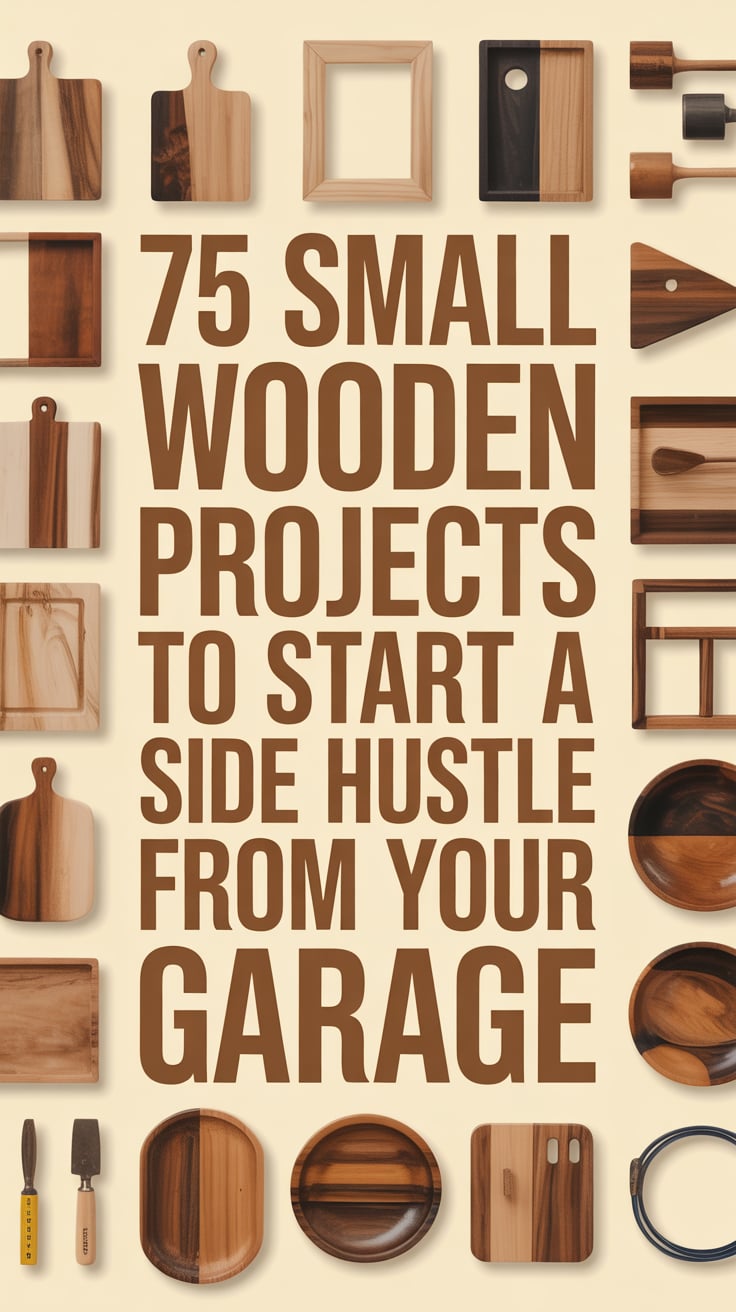
If you want to turn sawdust into income, this guide to 75 small wooden projects to start a side hustle from your garage shows you exactly what to build, how to price, and how to sell. These compact projects use affordable materials, finish quickly, ship easily, and are perfect for weekend builders looking for consistent profit.
Tip: Want plans you can execute fast without guesswork? Browse thousands of small builds and jig ideas in TedsWoodworking to save design time and start producing sooner.
Table of Contents
Garage workshop setup for small projects
A garage micro-shop thrives on flow and repeatability. Organize your work in zones: rough cutting, joinery/sanding, assembly, and finishing. Rolling carts or fold-down benches keep pathways open and transform a tight space into a production line. Mount a vertical French cleat wall for frequently used tools; it shortens reach time and keeps benchtops clear.
Essential tools for small builds:
- Accurate measuring and layout (combination square, marking knife, center punch)
- Cutting: circular saw with a straightedge track, jigsaw or bandsaw for curves, and a miter saw for repeatable crosscuts
- Shaping/sanding: trim router with round-over and chamfer bits, orbital sander with varied grits (80–220)
- Drilling/joinery: drill/driver set, dowel jig or pocket hole jig
- Clamping: small F-style and quick-grip clamps for batch work
- Finishing: HVLP sprayer or foam brushes, drying rack, and a small box fan with filter
Dust, noise, and safety are non-negotiable. Add a shop-vac with a separator to each dust port and keep a HEPA filter on hand. Wear hearing protection and a good dust mask or respirator when sanding or spraying. See OSHA’s guidance on wood dust health risks for best practices (OSHA). For species selection and toxicity, The Wood Database is an excellent reference (The Wood Database).
Small-shop layout matters as much as the tools. A flip-top cart that holds a planer on one side and a sander on the other doubles your capacity without extra floor space. A fold-out finishing table keeps wet pieces away from dust-heavy zones. Store short hardwood offcuts and plywood scraps by size so you can reach for them first—many of the projects below can be made from offcuts and sell at a premium when they showcase interesting grain or live edges.
If you’re outfitting your first micro-shop and want a blueprint for tools, layout, and dust control, consider UltimateSmallShop – The Next Woodworking Blockbuster!. It distills setup choices so you can build more and tinker less.
External resources:
- OSHA: Wood dust hazards and controls (OSHA)
- The Wood Database: Species properties and safety (The Wood Database)
Profit blueprint for pricing, batching, and validation
Before cutting a single board, validate demand. Search Etsy and local marketplace listings to check top sellers, price bands, materials used, and customization trends. Note dimensions, finishes, and engraving options people pay for. Focus your first month on 3–5 products with clear demand and simple repeatable steps.
Pricing framework:
- Cost of materials + consumables (glue, sandpaper, finish)
- Labor hours x target hourly rate
- Overhead allocation (shop rent, tool wear, electricity)
- Desired profit margin
Example: If materials+consumables = $6, labor = 1.2 hours x $25 = $30, overhead = $2, cost base = $38. Add 30–50% margin → $49–$57 price. For fairs, round to clean numbers ($49, $59). Build in volume discounts for sets or bundles.
Batching is your secret weapon. Cut all blanks at once, then drill, route, and sand in station-based runs. You’ll shave minutes per unit and improve consistency. Create simple jigs (stops on your miter saw, drill guides, router templates) so every piece lines up with minimal measuring. Keep a “repeatable settings” notebook with bit heights, fence positions, and finish recipes for quick setup later.
Branding and finishing matter. A light round-over reads premium to buyers, as does a crisp hand-rubbed oil/wax finish or a satin spray topcoat. Add a wood-burned logo or small branded tag—identity builds repeat sales. Photograph with natural light and a clean backdrop; Etsy’s Seller Handbook has excellent tips on listings and photography (Etsy Seller Handbook).
If you want a step-by-step playbook on turning small projects into consistent orders, WoodProfits focuses on the business side—niche selection, pricing, and sales channels—so you can grow profit, not just projects.
External resource:
- Etsy Seller Handbook: Listing, pricing, and shipping best practices (Etsy Seller Handbook)
Home decor hits: 18 small wooden projects customers love
These compact decor builds showcase grain, live edges, and clean geometry—the “scroll stoppers” that convert scrollers into buyers.
- Floating shelves (short lengths): Minimal hardware, easy to ship; offer walnut, oak, and stained pine tiers.
- Hexagon shelf set: Cut identical sides with a stop block; sell in sets of 3 for gallery walls.
- Live-edge mini shelves: Use narrow slabs or offcuts; clear satin finish highlights figure.
- Tea light candle holders: Drill 1.5″ recesses; bundle in sets of 3–5 with mixed species.
- Tiered plant stands: Small footprints catering to apartment plant parents.
- Picture ledges: Shallow lip for art prints; offer custom lengths.
- Wooden wall hooks/pegs: Modern pegs from dowel cutoffs; sell with mounting hardware.
- Entryway catch-all shelves: Shelf + key hooks combo; perfect upsell with key bowl.
- House number plaques: CNC or template-routed numbers; outdoor finish.
- Geometric wall art (strip mosaics): Batch-cut strips from scrap; glue up patterns.
- Charred shou sugi ban accents: Torch and seal; dramatic texture, low material cost.
- Rustic lantern frames: Acrylic or glass optional; tea light compatible.
- Minimalist clocks: Router a recess for clock kit; veneer face or bold grain.
- Framed mirror with miter keys: Elegant gift item; add spline accents for strength.
- Magnetic key holders: Hidden magnets under a thin face; surprise-and-delight utility.
- Incense holders: Simple groove and ash cup; small-item impulse buy.
- Wooden vases (glass insert): Drill cavity for a glass test tube; irresistible to plant lovers.
- Sliding-lid keepsake boxes: Use thin stock; personalization via laser or branding iron.
Finishing tips: For decor, matte and satin outperform gloss in photos. Keep a standard finish chart (natural oil, walnut stain, black wash) and show side-by-side listings so customers choose confidently.
Packaging: Wrap with kraft paper and a care card. Small wall pieces typically fall under parcel size limits; check local postal dimensional thresholds to choose cost-effective services.
Kitchen and bar: 12 compact builds that fly off tables
Food-adjacent items sell year-round, especially with giftable packaging. Use food-safe finishes like mineral oil, beeswax blends, or hardwax oils designed for contact surfaces.
- End-grain coaster sets: Use offcuts; add cork backs.
- Bottle openers with hidden magnet: Catch falling caps—great demo piece at markets.
- Minimalist serving boards: Petite charcuterie boards in premium woods; chamfered handles.
- Trivets with geometric cutouts: Laser or jigsaw; heat-resistant rubber feet.
- Salt cellars with pivoting lid: Rare-earth magnet closure feels premium.
- Spice racks (wall or counter): Narrow footprint designs fit small kitchens.
- Coffee filter holders: Cone or flat-bottom style; add matching scoop upsell.
- Mug trees: Stable base, turned or laminated arms.
- Wine glass racks (under-cabinet): Simple slotted cleats; fast batch production.
- Utensil caddies: Divided compartments; great for picnics and barbeques.
- Napkin holders: Weighted or upright designs; bundlable with coasters.
- Recipe tablet stands: Groove with lip; maintain 9–11″ width for most tablets.
Pricing and bundling: Offer “kitchen starter” bundles (coaster set + napkin holder + bottle opener) at 10–15% off. Bundles lift average order value with minimal extra work.
Photography note: Use food props to show scale and use. Avoid high-gloss finishes that glare under lighting.
Office and tech accessories: 12 practical organizers for modern desks
Everyone wants a clean desk. These small wooden projects are fast to produce and ship flat or compact.
- Monitor risers: Simple arc or box designs; storage underneath for notebooks.
- Phone docks: Cable pass-through and a felt-lined shelf add value.
- Headphone stands: Laminated arc or vertical dowel with a weighted base.
- Cable organizers: Slotted blocks with adhesive backs; sell in 3-packs.
- Pen trays and catch-alls: CNC or router dish; engrave initials for personalization.
- Business card holders: Offer varied species; sells well at corporate gifting.
- Laptop stands: Fixed angle for airflow; anti-slip pads on contact points.
- Bookends: Metal insert for weight; geometric or silhouette cut designs.
- Desk shelves (shelf riser): Fits over keyboard; spruce up remote work setups.
- Whiteboard eraser blocks: Felt-bottomed; brandable giveaway item.
- Compact calendar blocks: Swapable month/day blocks; giftable year-round.
- Dice trays for gamers: Faux leather inlay; pair with a matching token tray.
Finishing detail: A light round-over on desk edges is tactile and photograph-friendly. For tech items, neutral woods (maple, ash) with clear finishes blend into most setups.
Shipping tip: Many desk items nest or ship flat with simple assembly—include a mini screwdriver and a quick-start card for a professional touch.
Outdoor, garden, and pet: 15 durable minis for everyday use
Use weather-resistant finishes or species (cedar, cypress, white oak). Pre-drill and use exterior screws when appropriate.
- Planter boxes (small): 6–8″ cube or window sill planters; cedar is a favorite.
- Vertical herb planters: Slim wall-mounted rails with pots or boxes.
- Garden tool racks: Pegged or slotted designs; easy upsell with label tags.
- Bird feeders: Hopper or platform styles; acrylic window versions are popular.
- Birdhouses: Classic pitched roof; sell unfinished or finished.
- Boot scrapers: Stiff brush inset or slatted scraper; functional impulse buy.
- Outdoor lanterns: Slatted frames with weather-resistant finish.
- Patio coasters: Thicker, rustic look for outdoor tables.
- Hose hangers: Curved support with mounting plate; add house numbers for flair.
- Wall-mounted bottle openers (outdoor): Stainless hardware; rustic vibe.
- Garden markers: Laser-engraved cedar slats; sell in sets of 10–20.
- Bee/bug hotels: Drilled blocks with varied hole diameters; educational gift.
- Pet leash holders: Name personalization; pair with entryway hooks.
- Elevated pet bowls (small): Stable frames with stainless bowls; custom heights.
- Outdoor key boxes: Discreet wall-mounted with magnet latch.
Outdoor finish: Penetrating oils or exterior waterborne urethanes stand up to sun and rain. Offer a maintenance note card (“refresh with oil every 12–18 months”).
Market angle: Garden centers and pet boutiques are great wholesale targets for these SKUs. Provide simple branded packaging and a small display stand.
Gifts, kids, and seasonal: 18 fast movers and easy upsells
Giftable items benefit from personalization and seasonal timing. Keep templates ready for laser engraving or branding stamps.
- Name puzzles (simple block letters): Smooth edges; non-toxic finish for kids.
- Wooden spinning tops: Turned or cut-from-sheet; great for fair demos.
- Yo-yos with inlay: Lightweight hardwood faces; nostalgic appeal.
- Domino sets with box: Contrast woods for pips; premium gift set.
- Tic-tac-toe travel set: Magnetic pieces fit into a sliding-lid case.
- Minimalist photo frames: Standard sizes (4×6, 5×7); include easel backs.
- Ornament sets: Year-dated collections sell as annual traditions.
- Gift card holders: Sliding or pivot lids; personalize with initials.
- Ring boxes: Hinged or magnetic; felt-lined interior elevates value.
- Candle risers/pedestals: Pair with tea light blocks; sell in 3 heights.
- Wine bottle gift boxes: Slim, elegant; offer monograms.
- Memory boxes: Keepsake scale (6–8”); classic wedding/anniversary gift.
- Keychains with inlay: Small-scale scrap user; bundle pricing.
- Knife display stands: For collectors; small footprint on shelves.
- Coat rack rails: Short 3–5 hook version; compact packaging.
- Doorstops with leather pull: Weighted hardwood wedges; stylish utility.
- Puzzle coasters (interlocking): Conversation starter; combine with standard set.
- Engraved milestone blocks: Baby months, achievements; evergreen gift idea.
Seasonality: Launch ornaments and gift card holders by October, wedding boxes and ring boxes before peak wedding seasons, and teacher gift items in late spring.
Upsells to test: Add personalized tags, engraving, gift-wrap, and “care kit” add-ons (small bottle of oil and cloth). These can add 15–30% to AOV with minimal extra inventory.
Conclusion: your first sales with 75 small wooden projects
You now have 75 small wooden projects to start a side hustle from your garage, plus the setup, pricing, batching, and selling strategies to make them profitable. Start with a tight list of 3–5 items, batch them in tens, and photograph them cleanly. Lean on repeatable jigs, keep finishes consistent, and add personalized touches that buyers love.
Quick next steps:
- Pick your first 5 projects and source materials this week.
- Build simple jigs and a drying rack to speed up batching.
- List your products with lifestyle photos and clear size/finish options.
- Track time and costs on the first 20 units; refine pricing from data.
Want more plug-and-play plans you can produce fast? Tap into TedsWoodworking for thousands of project plans and jigs.
Ready to turn builds into a business? Get the pricing and sales playbook from WoodProfits.
Outfitting your garage shop on a budget? Use UltimateSmallShop – The Next Woodworking Blockbuster! to plan your layout and tools.
FAQ
How do I choose wood species for small wooden projects?
Start with stable, easy-to-work species like maple, cherry, walnut, ash, and quality pine. For price-sensitive items, mix hardwood tops with pine bases to balance cost. Check species hardness, movement, and toxicity at The Wood Database.
What finish should I use for kitchen and food-contact items?
Use food-safe finishes like mineral oil, beeswax blends, or hardwax oils designed for food-contact surfaces. Reiterate care instructions on a card (“re-oil monthly”); it reduces returns and boosts perceived quality.
How can I price my first 10–20 products?
Use a simple formula: materials + consumables + labor (hours x rate) + overhead + margin. Validate by comparing to similar Etsy listings. Adjust after your first batch with measured build times to protect margins.
What are the best small wooden projects to sell first?
Pick 3–5 from this list that batch well and ship easily: coaster sets, bottle openers with hidden magnet, phone docks, hexagon shelves, ring boxes, and planter boxes. They have broad appeal and low material costs.