
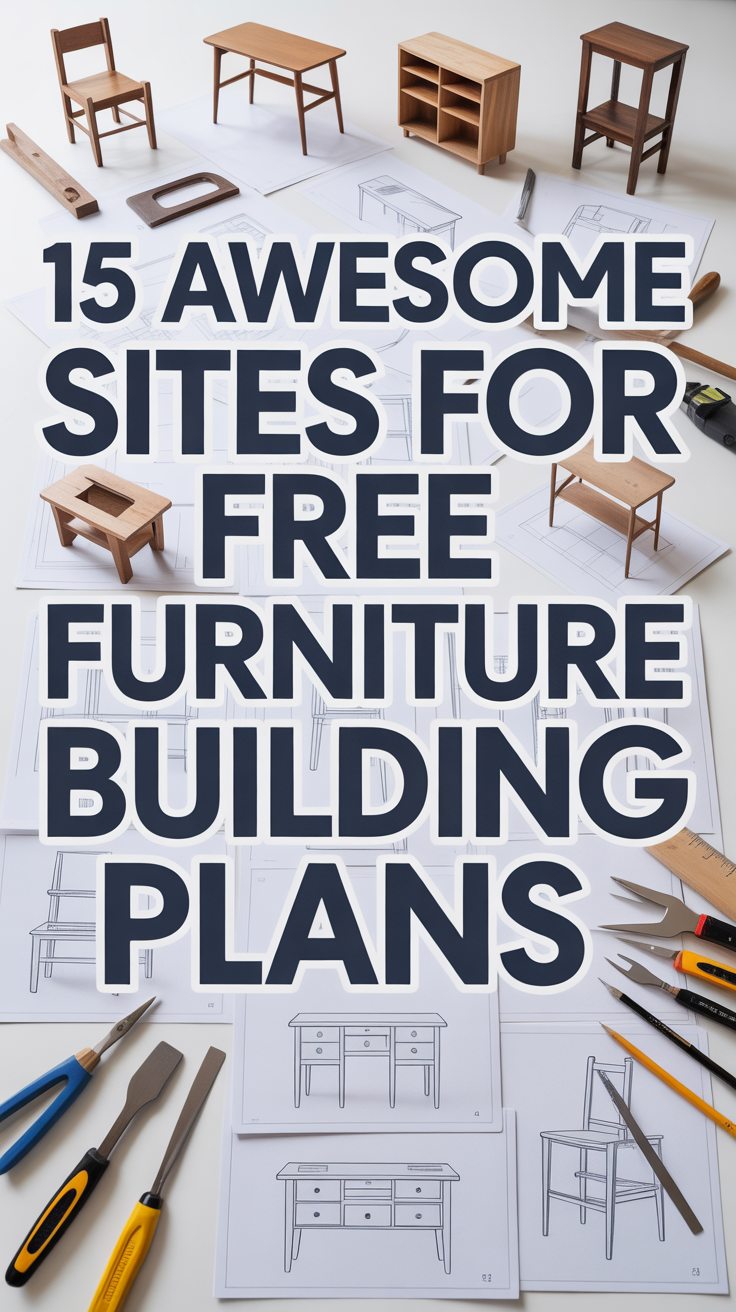
Ready to build your next coffee table, bookshelf, or patio set without spending a dime on blueprints? This guide rounds up 15 awesome sites for free furniture building plans—covering beginner-friendly builds, modern farmhouse styles, outdoor sets, and pro-grade projects. You’ll find printer-ready PDFs, cut lists, and step-by-step project tutorials to help you start building right away.
If you want a structured library of plans all in one place, a curated premium collection like TedsWoodworking can complement the free resources below with organized, ready-to-build projects.
Table of Contents
What to look for in a great free plan site
Not all plan libraries are equal. Before you download and cut into wood, use these criteria to evaluate whether a site’s free furniture plans will serve you well:
- Clarity and completeness: Look for step-by-step instructions, a shopping list, a cut list, and clear diagrams or photos. Plans that detail joinery, fasteners, and measurements help you avoid costly mistakes.
- Skill level labeling: Beginner, intermediate, and advanced tags help you pick the right challenge. If a plan doesn’t specify, scan for complex joinery and tight tolerances as a quick difficulty check.
- Material and tool transparency: Good plans list required tools and call out dimensioned lumber vs. sheet goods. Plans that include alternatives for tools you may not own are even better.
- Real-world build notes: Process photos, tips, and common mistakes add context—and can save you time. Comment sections and community builds also reveal hidden pitfalls or helpful hacks.
- Printable formats: PDF versions are ideal for the shop, while mobile-friendly pages help on the go.
- Style consistency: Sites typically lean toward a style—modern, farmhouse, mid-century, or shop furniture. Matching your home’s aesthetic reduces customization work.
- Safety reminders: Plans that flag dust collection, PPE, and safe cutting sequences are a plus. When in doubt, review a safety checklist before you start. For general guidance, see OSHA’s woodworking safety considerations (OSHA Woodworking eTool).
Pro tip: If you’re brand new, start with a low-cost softwood build to learn accurate measuring, square assemblies, and glue-up timing. The first project is about process, not perfection.
[Essential woodworking safety checklist](INTERNAL LINK PLACEHOLDER)
Best beginner-friendly sites for free furniture building plans
If you’re just getting started, these sites excel at clear instructions, approachable joinery, and builds you can complete in a weekend.
Ana White — A go-to for DIYers, with approachable furniture plans that emphasize pocket-hole joinery and dimensional lumber. Expect coffee tables, farmhouse beds, benches, and organizational pieces. Many plans offer full cut lists, diagrams, and tips for modifications.
BuildSomething by Kreg Tool — A curated community of free furniture plans created with Kreg’s pocket-hole system in mind. Perfect for common living-room and bedroom builds. You’ll often find beginner-friendly cut lists and assembly steps.
Jay’s Custom Creations — Clear, no-fluff plans and videos for projects like tables, cabinets, and shop furniture. Jay’s teaching style helps beginners grasp layout, joinery, and efficient workflow.
DIY Pete — High-energy, easy-to-follow project guides and videos that help beginners complete stylish furniture with a basic tool set. Great for coffee tables, patio pieces, and storage projects.
The Design Confidential — Stylish furniture plans often inspired by popular retailers, broken into doable steps using affordable materials. Expect clearly labeled diagrams and options for custom sizes.
Why these are great for beginners:
- Pocket-hole joinery and screws are common, reducing the need for complex tools.
- Clear photos, materials lists, and cut sheets make planning easier.
- Many builds use standard 2x lumber and plywood, keeping costs down.
- Plenty of modern, family-friendly furniture that’s both functional and attractive.
As you browse, bookmark two or three plans at your skill level, then compare materials and tools. If one plan calls for specialized cutters or hardwoods you don’t have, switch to the simplest option to ensure success.
Modern farmhouse and minimalist style sources
If your aesthetic leans modern, minimalist, or farmhouse, these sites shine with clean lines and on-trend finishes—without complicated joinery.
Shanty 2 Chic — A staple for farmhouse-style builds with a designer look. Expect modern X-base tables, console tables, bookcases, and bench seating, often using budget-friendly materials.
Rogue Engineer — Clean, modern furniture plans with helpful cut diagrams and templates. Great for TV consoles, coffee tables, and stylish storage that looks store-bought.
Sawdust Girl — Detailed cabinetry and built-ins with a designer’s eye. Plans tend to be more involved than beginner basics but are a great bridge into cabinetry and custom storage.
Houseful of Handmade — Creative farmhouse and Scandinavian-inspired designs that blend function with aesthetic. Look for accent tables, mudroom storage, and built-in looks.
The Design Confidential — Worth repeating here for its modern, retailer-inspired pieces. The plans focus on sleek silhouettes and adaptable dimensions.
Style-building tips:
- Keep the palette minimal and let wood grain shine; consider oak, ash, or maple for modern looks. The Wood Database is a helpful reference for wood characteristics and workability (The Wood Database).
- Use mitered corners and chamfers for clean edges; swap exposed screws for hidden pocket holes or dowels where desired.
- Choose subdued finishes—matte polyurethane, hardwax oils, or water-based poly—to avoid ambering modern tones.
If you’re updating an entire room, choose two plans from the same site to maintain proportion and style coherence—like a matching coffee table and media console.
Outdoor and patio furniture plans you can build free
Outdoor furniture needs beefier joinery, weather-resistant finishes, and wood species that handle the elements. These sites provide solid options for benches, Adirondack chairs, outdoor dining, and lounge pieces.
Instructables Workshop — A vast library of user-submitted plans. You’ll find classic Adirondacks, folding chairs, outdoor sectionals, and pergola seating—often with detailed build photos.
Family Handyman — Practical outdoor builds engineered for durability, like deck benches, planters, and patio dining tables. Instructions emphasize straightforward construction and maintenance.
Rogue Engineer — Modern outdoor sets, sectional seating, and dining tables that look like high-end patio furniture. Plans usually include technique tips for repetitive cuts and layout.
Lowe’s DIY Projects & Ideas — Outdoor furniture, planter benches, and deck add-ons with cut lists and clear diagrams. Great for sourcing materials in one trip.
Outdoor build tips:
- Wood choice matters: Consider cedar, white oak, or pressure-treated pine for frames; avoid fasteners that corrode outdoors—use exterior-rated screws and weatherproof glues.
- Finish smart: Exterior poly, spar urethane, or penetrating oils extend life. Recoat schedules vary by climate.
- Design for drainage: Slight seat slopes, slatted tops, and raised feet reduce moisture issues.
- Pre-drill and countersink: Prevent splits and keep fasteners flush for a polished, long-lasting finish.
For finish best practices and long-term maintenance advice, magazines like Fine Woodworking publish helpful guidance and testing on adhesives and finishes (Fine Woodworking).
Storage, organization, and shop furniture plan libraries
Strong storage builds teach square assembly, repetitive cuts, and hardware installation—skills you’ll use on almost every furniture project.
Jay’s Custom Creations — Excellent shop furniture builds: workbenches, miter saw stations, and clamp racks. Clear diagrams and video walk-throughs.
Ana White — Tons of storage designs from cube organizers to mudroom benches and closet systems. Great for customizing sizes to fit your space.
Canadian Woodworking & Home Improvement — Free plans for cabinets, tool storage, and small furniture with an emphasis on safe, accurate techniques.
The Design Confidential — Stylish media built-ins and modular storage with easy-to-customize dimensions.
Family Handyman — Garage and basement storage with friendly step sequences and sizing tips. Ideal for practical, no-fuss builds.
Storage build tips:
- Plan hardware early: Slides, hinges, and pulls change clearances and drawer sizes—pick them before cutting parts.
- Break down sheets safely: Plywood projects are efficient and budget-friendly. Use a track saw or circular saw with a straightedge and support your sheet goods to prevent binding.
- Label parts: Alphabet labels on panels prevent assembly confusion during glue-ups.
If you’re upgrading your workspace to tackle these projects, a streamlined shop layout makes a big difference in speed and accuracy. See the mid-content resource below to set up a small but efficient workspace.
Top pro-grade sites for free furniture building plans
These reputable magazines and archives offer polished drawings, detailed joinery, and time-tested instruction—ideal if you want to stretch your skills.
Popular Woodworking (Free Plans) — A rotating selection of free project plans with classic joinery, from side tables to bookcases. Great for improving your technique.
Wood Magazine (Free Plans) — Periodic free projects from a long-running publication: end tables, shop fixtures, and household furniture with measured drawings.
Canadian Woodworking & Home Improvement — In-depth tutorials and accurate plans, often with jig recommendations and safe cutting sequences.
Family Handyman — Practical furniture and household projects with straightforward methods and materials you can buy locally.
Why these matter:
- You’ll learn classical techniques—mortise and tenon, dovetails, edge banding—that elevate durability and craftsmanship.
- Plans often include exploded views and measured drawings that improve your reading of technical diagrams.
- Even if you build a simplified version, you’ll pick up professional tricks you can reuse on every project.
Mid-content resource for your workshop:
If you’re working in a tight garage or shared space, UltimateSmallShop – The Next Woodworking Blockbuster! can help you plan a compact, efficient, and budget-conscious shop layout so you can actually build the projects you’re discovering.
How to use free plans effectively and build with confidence
You found a plan—great. Here’s how to go from download to a clean, square build with fewer surprises.
- Read the plan twice: First for the overview, second for measurements and sequence. Note special tools or bits you’ll need (e.g., doweling jig, pocket-hole system, flush-trim router bit).
- Dry fit components: Test assemblies without glue to identify miscuts or twist. Correct early, not during glue-up.
- Cut list strategy: Break down sheet goods first while your energy is highest; rip solid lumber while it’s still straight and acclimated. Mark grain direction and show faces.
- Mill just enough: If you don’t own milling tools, buy S4S lumber when possible. Minor sanding and edge breaking often suffice for beginner plans.
- Square assemblies: Use corner clamps, cauls, and diagonal measurements. If the diagonals match, your casework is square.
- Fastener choices: Pocket screws are quick; dowels or loose tenons hide joinery; confirmat screws shine on plywood cabinets. Match the method to the project’s style and load.
- Sanding and finishing: Sand through grits progressively. For modern looks, keep edges crisp; for farmhouse styles, break edges slightly and consider stain plus a protective topcoat.
Safety and dust management:
- Wear eye, ear, and respiratory protection, especially during sanding and routing. For a high-level safety overview, see OSHA’s guidance (OSHA Woodworking eTool).
- Use push sticks and featherboards; avoid freehand cuts on the table saw.
- Hook up dust collection when possible; even a shop vac helps reduce airborne dust.
Downloading and adapting plans:
- Adjust dimensions in multiples of your material thickness to avoid recalculating every joint.
- If you alter width or height, ensure overhangs, stretcher lengths, and door/drawer clearances change consistently.
- Update cut lists before cutting; write the new numbers right on the printout.
Shop setup help:
If your space or tool set is holding you back, UltimateSmallShop – The Next Woodworking Blockbuster! offers practical guidance on outfitting a small shop efficiently—so you can build more, even in a single-car garage.
Quick start with curated plans (CTA)
While free sites are fantastic for inspiration and learning, sometimes you want a ready-to-build plan library you can search and print without hopping between blogs. If that’s you, explore TedsWoodworking for a broad collection of step-by-step projects, organized so you can find the right build fast.
Recommended resources to go beyond free plans
- TedsWoodworking: A robust, organized set of woodworking plans with step-by-step guidance—ideal when you want consistency and print-ready diagrams.
- UltimateSmallShop – The Next Woodworking Blockbuster!: A practical guide to building an efficient small-space workshop and choosing tools wisely.
- WoodProfits: For makers considering selling their builds, this resource covers the basics of turning projects into a side income.
- My Shed Plans: Useful if your next “furniture” project is a bigger backyard structure like a shed or garden storage.
The 15 awesome sites for free furniture building plans (recap list)
Here’s the full list in one place for quick bookmarking:
- Ana White
- BuildSomething (Kreg Tool)
- Jay’s Custom Creations
- DIY Pete
- The Design Confidential
- Shanty 2 Chic
- Rogue Engineer
- Sawdust Girl
- Houseful of Handmade
- Instructables Workshop
- Family Handyman
- Canadian Woodworking & Home Improvement
- Popular Woodworking
- Wood Magazine
- Lowe’s DIY Projects & Ideas
Conclusion
Whether you want a quick weekend build or a room-defining showpiece, these 15 awesome sites for free furniture building plans offer everything from beginner-friendly designs to pro-level projects with detailed drawings. Start with a plan that matches your skill level, choose materials wisely, and build safely. When you’re ready for a consistent, searchable library to streamline your workflow, a curated collection like TedsWoodworking pairs perfectly with the free plan sites above. Happy building!
Frequently asked questions
What are the best beginner projects from these free plan sites?
Start with small tables, benches, cube storage, and simple nightstands from sites like Ana White, BuildSomething, and DIY Pete. These teach square assemblies and pocket-hole joinery without complex tooling.
How do I know if a free furniture plan is accurate?
Look for measured drawings, complete cut lists, and build photos. Plans from established publications (Popular Woodworking, Wood Magazine) and seasoned creators tend to be more reliable. Dry-fit parts and confirm critical measurements before glue-ups.
Which wood should I use for my first builds?
Pine and poplar are budget-friendly and easy to work. For a deeper dive into wood properties (hardness, movement, workability), use references like The Wood Database to match species to your project’s needs.
Are pocket-hole plans strong enough for furniture?
Yes, for many applications when used properly and combined with glue; they’re especially practical for casework and tables. For heirloom-quality pieces, consider upgrading joinery to dowels, mortise-and-tenon, or loose tenons in high-stress areas.
What tools do I need to follow most free plans?
A circular saw (or miter saw), drill/driver, pocket-hole jig, sander, and clamps will complete many beginner-to-intermediate projects. As you progress, a table saw, router, and planer increase accuracy and speed.