
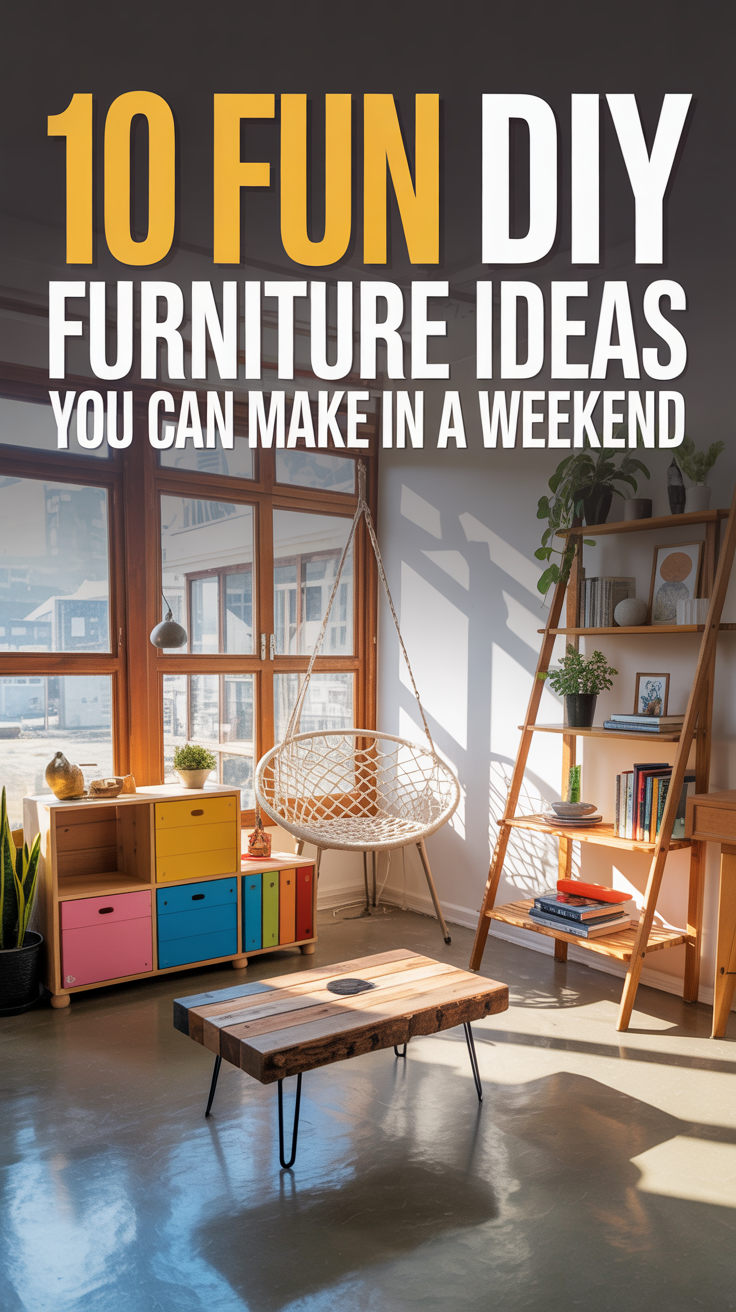
You don’t need a full workshop or months of spare time to upgrade your home. These 10 fun DIY furniture ideas you can make in a weekend are approachable, budget-friendly builds that deliver big style with simple tools and materials. Whether you’re brand new to woodworking or already comfortable with a saw and sander, you’ll find weekend projects here that fit your space, skill level, and style.
If you want step-by-step plans you can print and follow as you build, check out TedsWoodworking for a huge variety of beginner-friendly furniture projects.
Before you start, remember the basics:
- Measure twice, cut once; dry-fit parts before final assembly.
- Sand progressively (80/120/180 or 220 grit) and remove dust before finishing.
- Use wood glue and clamps for strong joints; add screws for reinforcement when needed.
- Work safely: eye/ear protection, dust mask, and tool guards. See OSHA guidance for shop safety on OSHA woodworking.
Table of Contents
Pallet coffee table on casters with a smooth top
Pallets are a weekend builder’s secret weapon: low-cost, rustic, and easy to transform. This coffee table keeps the pallet charm but upgrades function with a smooth top and rolling casters for easy movement in small spaces.
What you’ll need
- A hardwood pallet in good condition (or reuse pallet slats)
- 1 sheet of 1/2 in or 3/4 in plywood for the top and bottom shelf
- 4 locking casters rated for furniture
- Wood screws, wood glue, brad nails (optional)
- Orbital sander, drill/driver, saw, clamps
Build steps
- Prepare the pallet: Pry off broken boards, remove nails, and sand thoroughly to remove grime and round over splinters.
- Box in the base: Cut a plywood panel to match the pallet footprint and attach underneath with glue and screws. This stabilizes the frame and creates a shelf.
- Add a smooth top: Rip pallet slats or use a plywood panel for the top. For a rustic look, alternate slats with tight gaps. For a modern look, a single plywood slab with edge banding works well.
- Install casters: Pre-drill corners; use washers and bolts or heavy-duty screws. Locking casters keep the table from drifting.
- Finish: Stain for warmth or paint for a fresh pop of color; seal with water-based polyurethane for durability.
Design tip: If you like storage, leave a 2–3 inch lip around the top to hold remotes and magazines and add a crate or baskets on the lower shelf.
Floating nightstands you can make in a weekend
Floating nightstands free up floor space, making bedrooms feel bigger and easier to clean. You can build a sleek, wall-mounted box with a hidden shelf or a small drawer using basic plywood and a French cleat.
What you’ll need
- 3/4 in plywood or hardwood boards
- 1/4 in plywood for drawer bottoms or back panel
- Pocket hole jig or simple butt joints with glue and brads
- French cleat hanger (store-bought or DIY from plywood)
- Drawer slides (optional), screws, finish
Build steps
- Cut your parts: Top, bottom, sides, back, and face. Keep the depth to 10–12 inches so it doesn’t crowd the bed.
- Assemble the box: Pocket screw or glue-and-brad the sides to the top and bottom. Add a back panel for rigidity and to hide cords.
- Add storage: For an ultra-simple build, include a single internal shelf. For a more advanced take, add a shallow drawer with small slides.
- Mount with a French cleat: Install the wall-side cleat into studs; mate the cabinet-side cleat and hang. Ensure it’s level and secure.
- Finish: For a modern vibe, paint the exterior and clear-coat the natural wood front. Route a cable pass-through at the back for chargers.
Pro tip: Edge-band plywood for a clean look. A router and flush-trim bit make this fast, but you can also iron on veneer edging.
Simple 2×4 bench with crisp lines and hidden screws
A 2×4 bench is the perfect introduction to joinery and layout. It’s sturdy, stylish, and adaptable to entryways, dining tables, or patios. Hidden screws and plugged holes give it a custom, high-end look.
What you’ll need
- Kiln-dried 2×4 lumber (avoid warped boards)
- Pocket hole jig or countersink bit and wood plugs
- Wood glue, screws, tape measure, square, sander
- Optional: bevel cuts for tapered legs
Build steps
- Mill and prep: Pick straight 2x4s, cut to length, and sand faces and edges smooth. Rip to a consistent width if you want a sleeker, furniture-grade profile.
- Frame and top: Build a rectangular leg frame with stretchers; hide screws on the inside using pocket holes. Add the seat slats or a single laminated top.
- Strengthen joints: Glue and screw; consider a center stretcher for longer benches.
- Plug and finish: Counterbore screw holes, insert wood plugs, trim flush, and sand. Finish with oil for a natural look or stain-plus-poly for durability.
Customization ideas
- Add a lower shoe shelf for entryway organization.
- Cut a slight 5–10 degree taper on legs for a modern silhouette.
- Use exterior finish for outdoor use.
External resource: Family Handyman’s simple bench tips are a great visual reference at Family Handyman.
Hairpin-leg side table with a solid wood round top
Hairpin legs bring mid-century style to DIY builds with almost no joinery required. Pair a round wood top with steel hairpin legs for a timeless side table that assembles in an afternoon.
What you’ll need
- Hardwood edge-glued panel or a glued-up round
- 3 hairpin legs with mounting plates (or 4 if you prefer)
- Screws, drill/driver, sander, finish, measuring tape
- Optional: circle-cutting jig for a router or jigsaw
Build steps
- Create the top: Cut a circle using a jig or trace a large round object for a template. Sand a generous 1/8 in roundover on the edge for comfort.
- Locate legs: Space three legs evenly (every 120 degrees) for a tripod stance or use four legs for maximum stability. Pre-drill to prevent splitting.
- Attach and finish: Screw legs into place, then remove and finish the top separately for a cleaner look. Reinstall legs after the final coat cures.
Style ideas
- Two-tone finish: Natural top with black legs, or ebonize the wood and choose brass legs.
- Add a small under-mounted tray for remotes using 1/4 in plywood.
External resource: Fine Woodworking has great advice on finishing techniques at Fine Woodworking.
Ladder-style bookshelf with plywood and dowel accents
Ladder bookshelves lean lightly against a wall and look custom-built. This version uses plywood uprights with hardwood shelves, secured with dowels or pocket screws for a clean look and reliable strength.
What you’ll need
- 3/4 in plywood uprights and 3/4 in hardwood or plywood shelves
- Dowels or pocket screws, wood glue
- Drill/driver, dowel jig (optional), sander, finish
- Anti-tip kit or L-brackets
Build steps
- Cut uprights: Rip two tall uprights with a slight taper or angle at the top. Round over front edges for a smooth, hand-friendly feel.
- Shelves: Cut 4–5 shelves, making the bottom one deepest. The ladder silhouette is achieved by reducing shelf depth as you move upward.
- Joinery: Drill dowel holes or use pocket holes beneath shelves so fixings are hidden. Glue and clamp each shelf square to the uprights.
- Secure to wall: Use an anti-tip bracket for safety, especially in homes with kids or pets.
- Finish: Clear polyurethane keeps a light, modern look; paint uprights and leave shelves natural for contrast.
Safety note: Always secure tall furniture to studs. See OSHA woodworking safety for shop best practices.
Slim entryway shoe rack and organizer
Entryways need clutter control without eating floor space. A slim shoe rack with an integrated tray and hooks handles daily essentials—shoes, keys, and bags—while maintaining a tidy look.
What you’ll need
- 1×2, 1×3, and 1×8 boards or plywood for shelves and sides
- Wood dowel or hooks for hanging
- Screws, glue, sander, finish
- Wall anchors or studs for mounting if making it wall-mounted
Build steps
- Frame: Build a shallow carcass (8–10 in deep) with sides and a top. Add a lower shelf angled slightly so shoes sit neatly.
- Accessories: Install a shallow tray at the top for keys and mail. Add a dowel or hooks along the side for umbrellas and bags.
- Back panel: Add a thin plywood back for stability and a finished look, or leave open for a lighter appearance.
- Mount or freestand: For ultra-narrow spaces, wall-mount it into studs; for freestanding, add adjustable feet to level on uneven floors.
- Finish: Durable paint hides scuffs; for wood grain, use a tough waterborne polyurethane.
Design tip: Install a small, framed mirror above the unit for last-minute checks on your way out the door.
Outdoor cedar planter bench for patio or balcony
Combine seating and greenery with a cedar planter bench that thrives outdoors. The design pairs two planters connected by a comfortable seat, perfect for small patios or balconies.
What you’ll need
- Cedar or other rot-resistant wood (like redwood)
- Exterior screws, exterior wood glue (optional)
- Waterproof liner or landscape fabric
- Drill/driver, saw, sander, exterior finish
Build steps
- Build planters: Assemble two box planters with slatted bottoms for drainage. Line with landscape fabric to protect wood while allowing water to escape.
- Add bench: Connect planters with a slatted bench seat, secured into the planter sides. Make the seat removable if you want to move planters independently.
- Protect: Round over edges and sand smooth. Apply exterior oil or clear sealer to resist weathering and UV.
- Planting: Use lightweight potting mix and choose plants suited to your sun exposure. Leave an air gap between soil and bench slats.
If you want full outdoor project plans and layout ideas, browse My Shed Plans for garden benches, planters, and backyard structures.
Narrow console table for the hallway
A narrow console table adds style and storage without crowding walkways. This modern build uses a simple apron-and-leg frame with a shelf, ideal behind a sofa or in tight hallways.
What you’ll need
- 1x or 2x hardwood for the top, 1x for aprons, 2×2 legs
- Pocket hole jig or mortise-and-tenon if you’re advanced
- Wood glue, screws, sander, finish
- Optional: small drawers for keys or remotes
Build steps
- Leg and apron prep: Cut four legs and four aprons. For a slim look, taper the bottom portion of each leg on the inside faces.
- Joinery: Drill pocket holes on the inside of aprons or cut traditional mortise-and-tenon joints. Dry-fit the base to ensure square corners.
- Top and shelf: Attach the top with figure-8 fasteners or slots to allow wood movement. Add a lower shelf for baskets and storage.
- Finish: Keep it light with a natural oil or go dramatic with a deep stain and satin topcoat.
Style ideas
- Add a small lip to the top to keep items from sliding off.
- Paint the base and leave the top natural for a two-tone look.
Upholstered storage ottoman with a hinged lid
An upholstered storage ottoman serves as seating, a footrest, and a hidden storage spot. The rectangular box-within-a-box design is simple and forgiving for first-time upholsterers.
What you’ll need
- 3/4 in plywood for the box, 1×2 for cleats
- Hinges or a soft-close lid support
- 2–3 in foam, batting, upholstery fabric, staple gun
- Screws, glue, sander, optional furniture feet
Build steps
- Build the box: Assemble a sturdy plywood box with interior cleats to support the lid. Add a bottom panel and sand all edges smooth.
- Hinge the lid: Use a piano hinge or two butt hinges; consider a lid support to keep fingers safe.
- Upholster: Glue foam on the lid panel, wrap with batting, then fabric; pull fabric tight and staple underneath. For the base, you can also wrap in fabric or paint/stain if you prefer wood.
- Add feet and finish: Screw in decorative feet or use hidden glides to keep the profile low.
Pro tip: Patterned fabric hides staple lines and small mistakes. Use a fabric with a bit of stretch for easier corners.
Fold-down wall desk for small spaces
A wall-mounted fold-down desk (sometimes called a “Murphy desk”) is a compact workstation that stows away when not in use. It’s perfect for apartments, guest rooms, or a kid’s homework nook.
What you’ll need
- 3/4 in plywood or hardwood for the cabinet and desktop
- Continuous/piano hinge for the fold-down top
- Chain or folding support brackets
- French cleat or heavy-duty wall anchors
- Magnetic catch, knobs or pulls, finish
Build steps
- Build the cabinet: Assemble a shallow wall cabinet sized to your space. Include a small internal shelf for notebooks and chargers.
- Add the desktop: Attach a piano hinge along the bottom edge of the cabinet front. Use chain or folding supports on both sides so the desktop sits level.
- Mount to studs: Install with a French cleat and long screws into studs. Make sure it’s level and test the supports.
- Finish: Paint to match the wall for a “built-in” look or add a contrasting wood top for warmth.
Cable management: Drill a grommet hole and route cables through the back. Add a magnetic catch to keep the door closed when folded up.
Build smarter, safer, and faster with a compact workshop setup
A smooth weekend build depends on a clear workspace, organized tools, and good dust control. If you’re setting up a small shop in a garage or spare room, a compact plan will save time and keep projects stress-free.
- Optimize flow: Group cutting, assembly, and finishing areas. A folding workbench or mobile carts free space when not in use.
- Essential tools: A circular saw with a straightedge, a drill/driver, sander, and a few sharp chisels can build most projects in this guide.
- Dust and safety: Use a shop vac with a cyclone separator; wear hearing and eye protection. See OSHA woodworking safety for dust hazards and PPE recommendations.
If you’re short on space and want a battle-tested setup plan, look at UltimateSmallShop – The Next Woodworking Blockbuster!. It focuses on getting maximum capability in minimal space, which is perfect for weekend builders.
Rustic crate-style sideboard with sliding doors
Crate-style sideboards deliver farmhouse charm with practical storage for dining rooms or living areas. The look is built from simple frame-and-panel construction with shiplap or slatted doors that slide on an inexpensive rail.
What you’ll need
- 1×3 and 1×4 lumber for face frames
- Plywood for carcass and shelves
- DIY sliding door hardware (bar and rollers) or off-the-shelf kit
- Screws, glue, pocket hole jig, sander, finish
Build steps
- Carcass: Build a rectangular cabinet with a center divider and adjustable shelves.
- Face frame: Add a face frame to clean up edges and provide a stop for sliding doors.
- Doors: Make lightweight slatted or shiplap doors. Keep them square and flat for smooth sliding.
- Hardware: Install a rail across the top. Hang doors and add rear guides or a bottom track so they don’t swing out.
- Finish: Distress lightly for a vintage vibe, or keep edges crisp for a modern farmhouse look.
Tip: Use soft-close catches hidden behind the face frame to keep doors from clacking when closed.
Modular cube storage that stacks and locks
Cube storage is endlessly adaptable—use it as a media console, closet organizer, or kid’s room shelving. Building individual cubes that stack and lock lets you reconfigure your furniture whenever you want.
What you’ll need
- 3/4 in plywood for cube panels
- Wood biscuits or pocket screws, glue, clamps
- Dado blade (optional) for shelf grooves
- Interlocking hardware or simple dowel pins
Build steps
- Cut panels: Standardize sizes so cubes align neatly. Pre-finish inside faces for a cleaner result.
- Joinery: Assemble with pocket screws hidden on the underside or use biscuits and glue for seamless joints.
- Locking system: Drill aligned holes for dowel pins between cubes, or install simple interlocking brackets to keep stacks stable.
- Base: Build a toe-kick base to level the first row and keep doors (if added) from rubbing on floors.
- Finish: Satin clear coat for modern Scandinavian styling; add doors or baskets to some units for concealed storage.
Design idea: Mix open shelves with a few closed-door cubes and one drop-front cabinet for electronics.
Recommended plans and resources for weekend builds
Save time and guesswork with clear, printable plans and shop layouts that match how you build.
- TedsWoodworking – A broad library of project plans suitable for beginners through advanced woodworkers. Great for finding coffee tables, benches, shelves, and more.
- UltimateSmallShop – The Next Woodworking Blockbuster! – Practical guidance for setting up a capable workshop in tight spaces with smart tool choices and layouts.
- My Shed Plans – Outdoor structures and garden projects to complement your patio furniture builds.
External guides and references:
- OSHA woodworking safety – OSHA woodworking
- Family Handyman woodworking tips – Family Handyman
- Fine Woodworking finishing basics – Fine Woodworking
Conclusion
With these 10 fun DIY furniture ideas you can make in a weekend, you’ll transform rooms without long timelines or expensive materials. Start with a simple piece—like the 2×4 bench or hairpin-leg side table—then progress to buildable showpieces, from ladder bookshelves to fold-down desks. As your skills grow, refine your finishes, try new joinery, and invest in a compact, organized workspace that makes every weekend project faster and more enjoyable. Keep safety at the center, plan your cuts, and enjoy the satisfaction of furniture you built yourself.
FAQ
What tools do I need to start building DIY furniture?
A circular saw with a straightedge, drill/driver, orbital sander, measuring tape, square, clamps, and safety gear will handle most weekend builds. Upgrade to a miter saw or pocket hole jig as you go.
How do I choose wood for beginner projects?
Pick straight, kiln-dried boards with minimal knots. Pine and poplar are budget-friendly for painted pieces; oak and maple are great for durable, natural finishes.
Can I really finish these projects in a weekend?
Yes—each idea was chosen for its approachable scope. Prep materials in advance and plan dry times for glue and finish. Some finishing steps may extend into Monday for full cure.
What finish should I use on furniture?
Water-based polyurethane dries fast and resists wear. For a natural look, use Danish oil or hardwax oil. Check Fine Woodworking for finishing basics at Fine Woodworking.